

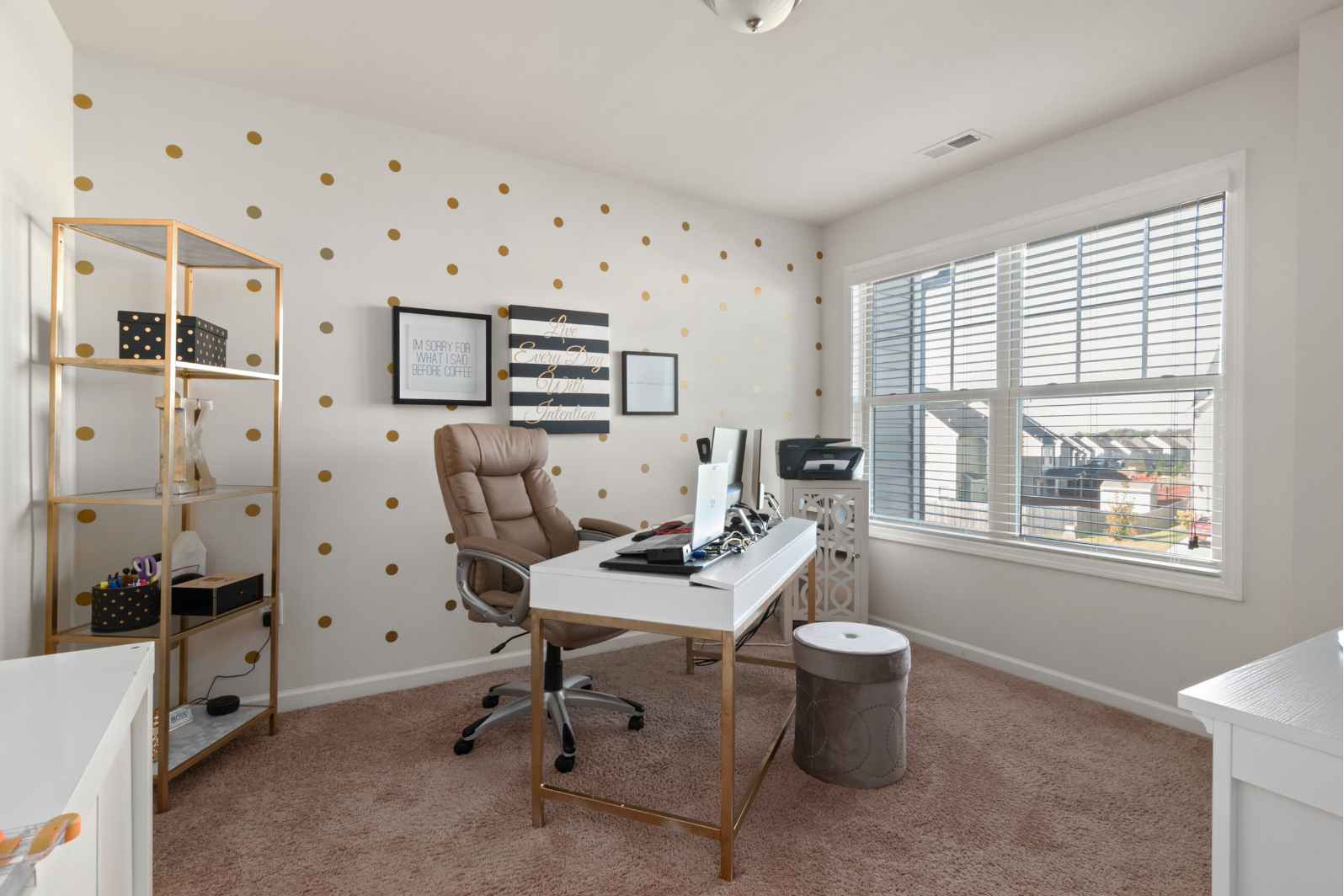
As remote work becomes increasingly common, having an aesthetically pleasing home office is a must to keep focused, comfortable and productive. A designated workspace does wonders to keep work life separate from the many personal distractions and sets an environment conducive to doing your best. Whether you work from home full time or just a few days each week, the right home office will make a big difference in how productive and creative you are – and it might even impact your overall well-being.
1. Choose the Right Location
Your work area should be peaceful, bright and without distraction. A separate room is great, but if it can’t be arranged pick a corner that feels private and cozy.
Example: Natural light can enter through a window in your desk area, which also may help boost energy throughout the day.
The takeaway: A tranquil space can aid focus and work-life balance.
2. Invest in Ergonomic Furniture
Productivity depends a great deal on comfort. Ergonomic chair and desk encourages healthy posture, promoting reduced time in uncomfortable positions, resulting in limiting back pain.
Example: Proper back support in an adjustable chair can stop strain on your neck and spine.
The takeaway: Good furniture enhances comfort and long-term health.
3. Prioritize Good Lighting
Lighting impacts mood and concentration. Natural light is ideal, but adjustable lamps or LED lights can be useful if sunlight is scarce.
Example: Swap out cool bulbs to lessen eye strain when you pull late-night work sessions.
The bottom line: Properly placed lighting increases alertness and decreases fatigue.
4. Keep Your Desk Organized
A clean workspace encourages clear and quick-thinking. Hang storage boxes, cable organizers and shelves to reduce clutter.
Example: Clearing your desk each day so you can start fresh when the next one begins.
The lesson: Meticulousness prevents distractions and begets tranquility.
5. Personalize Your Workspace
Your office decor should definitely be you, but professional. Include pieces that stimulate the imagination without dominating the space.
Example: A small plant, a motivational quote or a family photo can provide some comfort.
Takeaway: Personal details keep the workspace inviting and inspiring.
6. Use Technology Wisely
Have the right tools: Make sure your home office is stocked with essentials, like a fast computer, high-speed internet and noise-canceling headphones.
Example: A dual-monitor workstation can increase productivity by facilitating multitasking.
Bottom line: Smart tech setup results in increased efficiency and streamlined workflow.
7. Establish Boundaries
Establish firm lines between work and home-life to prevent burnout. Tell your kids what hours you’re working and not to interrupt when doing housework.
Example: When you turn off work notifications after hours, doing so helps you relax.
What this means for you: Boundaries create equilibrium and protect your mental health.
8. Incorporate Movement and Breaks
Long hours of sitting is bad for both health and focus. Add in brief breaks to stretch, move around or give your eyes a break.
Example: Stand and work at your desk, or take a short walk during lunch to keep energized.
The upshot: Use your body to keep your brain sharp and your body active.
9. Manage Noise and Distractions
Noise can disrupt the flow of work, particularly in collaborative environments. If you need to concentrate, use noise-cancellation and soft background music.
Sample activity: A white noise app may help mask household sounds and provide a space conducive to concentration.
The lesson here: Reducing depletion of willpower because of distractions is supportive of deep and undistracted work.
10. Bring in Nature
Incorporating nature can lift our mood and reduce stress. Plants, sunshine and fresh air adds up to a healthier workspace.
Example: A small desk plant such as a peace lily or succulent adds color and freshens up your office.
The takeaway: The great outdoors helps support focus and emotional regulation.
11. Maintain a Consistent Routine
Maintaining a regular schedule helps your brain get the message that it’s time to work, and when you’ll step away from the grind.
Example: Having the same start to your work day can help create discipline and rhythm.
The point: Regularity provides structure and long-term productivity.
Conclusion
Designing a productive home office space is about much more than just furnishings and gadgets; it’s about creating an environment that works for you as you work toward goals both professional and personal. With a little organization, good lighting, personal touches and healthy boundaries, you can turn any area of your home into one that promotes focus and creativity. A purposeful workspace isn’t just about productivity it’s about being able to enjoy what you do throughout the work day, with clarity and focus.
FAQs:
Q1. How can I turn my home office into a productive workspace?
Maintain an organized, well-lit space that’s free of distractions and use ergonomic furniture and clear boundaries.
Q2. What is the best color for a home office?
Soft blues, greens and neutrals help to calm and focus.
Q3. How do I stay productive while working from home?
Establish specific goals, a schedule and short breaks for relaxation.
Q4. How do I cut down on distractions at work?
Wear headphones, toggle off irrelevant notifications and establish solid working hours.
Q5. Do I need any high-priced gear for my home office?
Not at all; the best seats are not always determined by actual price. It’s more about comfort and organization than it is about cost.
