

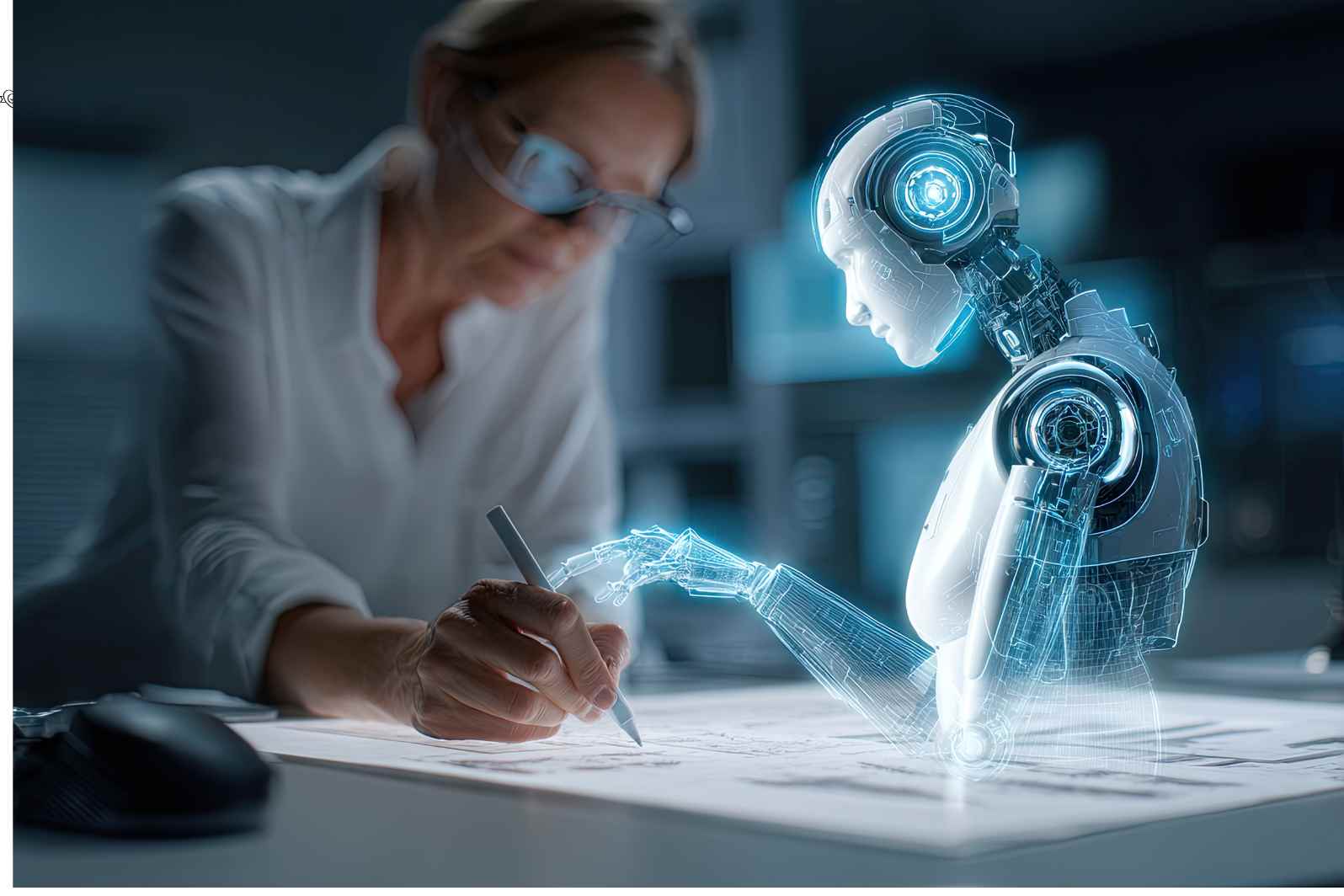
AI is revolutionising education by enabling learning to be more personalised, adaptive and engaging than ever before. Old school ways of teaching pack challenges when it comes to catering for each student’s specific pace, mode of learning, and best approach to grasp new concepts. And AI tutors address this hurdle by analyzing data on how students learn, determining gaps in understanding and then modifying lessons on the fly. AI tutors are changing the way students learn and teachers teach With smart feedback, tailored lesson plans, and 24/7 availability, AI tutors can help resolve gaps in learning.
1. The Rise of AI in Education
Artificial intelligence (AI)-based learning platforms are gaining currency in today’s classrooms and e-learning market. They employ machine learning to interpret student behavior and personalize content accordingly.
Example: Khan Academy’s Khanmigo and AI-driven learning assistants from Google offer personalized support to students… and instant feedback.
The takeaway: AI is not replacing teachers, but helping them expand the way they can effectively reach every student.
2. Understanding Personalized Learning
Personalized learning is about tailoring instruction so that each student’s individual needs, pace and goals can be addressed. AI tutors streamline this process, providing students with real-time data to move them toward mastery.
Example: If a student is struggling with fractions, an A.I. tutor serves up extra practice problems before guiding the student on to more advanced math topics.
The takeaway: Every student has a curriculum that is tailored to succeed.
3. Real-Time Feedback and Assessment
AI tutors provide immediate feedback that allows students to see errors in real time, as opposed to waiting for graded exercises.
Example: Writing tools such as Grammarly or QuillBot are able to make corrections, explain grammar and provide vocabulary suggestions as students write.
The lesson: Quick feedback speeds up learning and increases confidence.
4. Adaptive Learning Paths
AI systems monitor progress, and automatically adapt lessons according to performance. This way no student gets left in the dust or feels like the class is too easy.
Example: Platforms such as DreamBox and Coursera use adaptive technology to adjust the level of difficulty according to how well (or poorly) a student does.
The takeaway: Adaptive learning helps maintain a level of difficulty that keeps students challenged, which also increases engagement.
5. Data-Driven Insights for Teachers
AI can gather learning patterns and analyze them, helping teachers understand where a student excels or needs help. This enables teachers to provide them with the support they need.
Example: A teacher, through an AI dashboard, can immediately discern who needs help with reading comprehension.
The takeaway: AI empowers teachers and students through Actionable Insights.
6. Breaking Language Barriers
AI tutors with natural language processing let students learn in their native language or have instant translation of lessons.
Example: Language learning and cross-cultural education have never been easier with tools like Duolingo, as well as ChatGPT’s multilingual modes.
The takeaway: AI contributes to diversity and fair accessibility in education globally.
7. 24/7 Learning Support
As opposed to human tutors, AI tutors never take breaks and work continuously and hence make learning possible at the student’s most productive time of the day.
Example: A student studying late at night for an exam can invite an AI tutor to break down complex subjects one on one.
The takeaway: Unlimited personalized learning promotes self-reliance and adaptation.
8. Gamified and Interactive Learning
AI tutors employ gamified approach, which includes rewards, challenges and tracking the progress to make learning fun and engaging.
Example: Apps like Duolingo, Kahoot! employ artificial intelligence to individualize quizzes and motivate daily practice with points and badges.
The bottom line: Gamified AI platforms get students excited by turning their education into an interactive, enjoyable affair.
9. Emotional Recognition and Support
Contemporary AI tutors can now read facial expressions, the tone of our voice and levels of engagement to gauge a student’s emotional state.
Example: AI tools such as Replika and Affectiva identify whether a learner is getting frustrated or bored and change the lesson accordingly to re-engage them.
The lesson: An emotionally intelligent A.I. helps build a more empathetic and nurturing learning environment.
10. Knowledge for Everyone, Including Students with Disabilities
AI tutors also can be life changing for students with learning differences or disabilities. They offer assistive tech like speech-to-text or text-to-speech and visual learning aids.
Example: Microsoft’s Immersive Reader and Google’s host of accessibility tools make it easier for dyslexic or visually-impaired students to learn without stress.
The takeaway: AI means all students, regardless of ability level, have equal opportunity to learn.
11. Encouraging Independent Learning
AI encourages children to be self-motivated because students are able to regulate their own progression. It gives them the ability to learn at their own pace and return to lessons where necessary.
For example, students who are working with a platform such as Squirrel AI in China can monitor their progress and take personalized practice quizzes to strengthen weak spots.
The takeaway: AI develops confident, independent learners ready for lifelong success.
12. Reducing Teacher Workload
By automating set tasks such as grading, keeping attendance or even ordering lunch it frees up the teacher’s time to focus on interactive teaching and mentorship.
Example: Silicon Valley-based tools like Gradescope and Century Tech auto-grade other types of assignments, giving snapshots of student performance.
The takeaway: AI enriches the human side of teaching by ridding educators from repetitive work.
13. Building Future-Ready Skills
AI tutors don’t just teach kids subjects they find hard fundamental future skills like critical thinking, problem-solving and digital literacy will develop as you learn to chat with those AI tutors.
Example: AI virtual mentors lead students through coding challenges, design thinking projects and logic games.
The takeaway: AI is readying students for a rapidly-changing, tech-centric world.
Conclusion
AI tutors are changing the face of education, personalizing learning experiences, making them more engaging and improving efficiency. Thanks to in-the-moment input, adjusting systems and even emotional recognition, they make certain no one’s left behind. Artificial Intelligence (AI) tutors will increasingly work alongside teachers to ensure that an environment is created where each student can thrive, learn with confidence, and at their own pace.
FAQs:
Q1. How artificial intelligence can customize learning What if a personal tutor followed you from kindergarten through high school?
They use students’ data to generate personalized learning paths and they adjust lessons according to individual performance.
Q2. Is artificial intelligence replacing human professors?
No, AI tutors do not replace teachers; they just perform the same routine tasks and provide tailored help for students.
Q3. What skills can A.I. tutors help develop?
AI tutors enhance problem-solving, critical thinking, digital literacy, and self-directed learning.
Q4. Can AI tutors work offline?
Some apps that use A.I.-based learning have offline functionalities, but the majority of them require connectivity in order to receive real-time updates and feedback.
Q5. Is it safe to use an AI tutor?
Yes, established platforms have strict data privacy and ethical guidelines in place to provide safe learning environments.
