

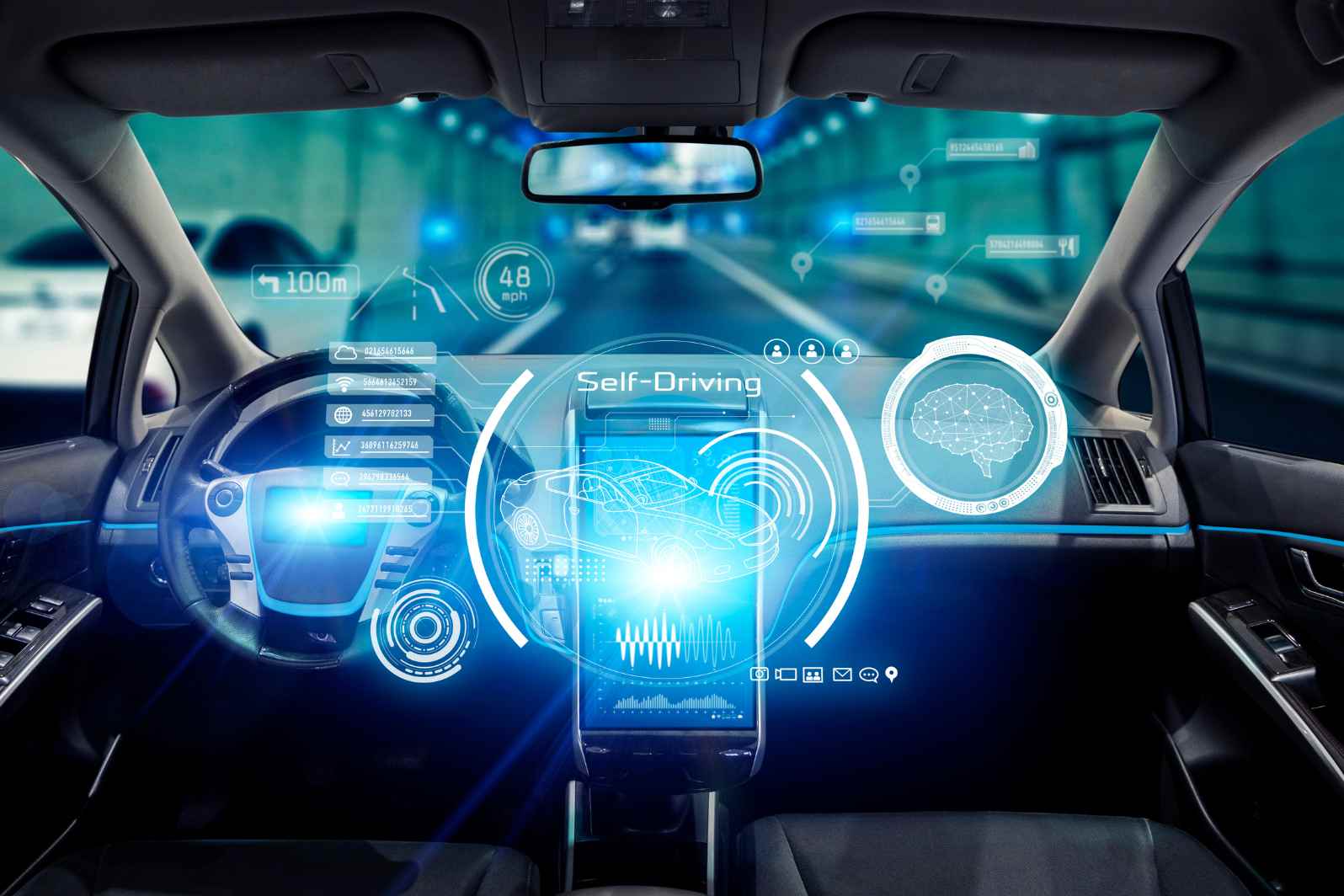
The notion of a connected car is truly one of the most intriguing developments in the world of transportation. Connecting with each other and nearby infrastructure through the Internet of Things, these vehicles are constantly in touch to improve safety and efficiency. From live traffic updates to instant crash reports, connected car technology is revolutionising safety on the roads around the world. By collating data, sensors and clever systems these approach is to prevent accidents, lower the likelihood of human error in driving and create a smarter road network for generations to come.
1. What Are Connected Cars?
Connected cars refer to the cars with access to internet and with the intelligent communication of devices, interoperating system, support system and organizational administrators.
Example: A connected car can warn other cars around it if it suddenly brakes in time to avoid dangerous rear-end accidents.
The takeaway: These are smart cars with connectivity to improve awareness and cut accidents.
2. Vehicle-to-Vehicle (V2V) Communication
V2V technology enables cars to communicate in real time about speed, position and direction. It allows alerts about possible hazards to be given in time.
For instance, if a vehicle stops short up ahead, your car gets an instant alert long before you notice it.
The particles: V2V communication shortens response time and can help avoid chain collisions.
3. Vehicle-to-Infrastructure (V2I) Systems
These help V2I (vehicle-to-infrastructure) systems to link cars with road signs, traffic lights and even tolling systems. This connectivity is better for traffic and safety.”
Example: A car can be notified when a traffic light is about to turn red or that road construction lies ahead.
The takeaway: Smart communication between cars and infrastructure can reduce the dangers and congestion on our roads.
4. Advanced Driver Assistance Systems (ADAS)
Driver-assistance functions like lane-keeping assist, adaptive cruise control and automatic emergency braking help keep driver vigilance from slipping and minimize human error.
Example: If a vehicle veers out its lane, ADAS nudges the steering to avoid an accident.
The bottom line: These systems serve as additional eyes and even reflexes for drivers, aiding them in safety-critical moments.
5. Real-Time Traffic and Hazard Alerts
Smart cars, which gather information and transmit data on traffic conditions, can warn drivers of an accident or treacherous weather up ahead.
Example: GPS-enabled apps that have been built into cars can automatically reroute drivers away from danger zones.
The lesson: With the aid of real-time updates, drivers can make safer and more informed decisions on the road.
6. Predictive Maintenance and Safety Monitoring
Sensors in internet-enabled vehicles constantly track the condition of the vehicle and can give drivers notice of a problem before it leads to an accident.
Example: The system could alert a driver to low tire pressure, or worn-down brakes before they become a safety hazard.
The takeaway: Early warning can be the difference between a life-or-death collision and safe driving.
7. Emergency Response and Crash Notification
In the event of an accident, it has the ability to automatically communicate and send accurate location information with emergency services.
Example: After serious crashes, the system notifies emergency personnel even if the driver is unconscious.
The takeaway: Quick communication is the difference between life and death, by making sure emergency crews get there sooner.
8. Pedestrian and Cyclist Detection
Connected cars with cameras, sensors and radar can identify pedestrians or cyclists and automatically brake if a collision is imminent.
Example: The car informs the driver when someone steps out suddenly onto the street, potentially averting accidents.
The lesson: High-tech detection keeps vulnerable road users safe.
9. Cloud-Based Data Sharing
Connected cars rely on cloud-based platforms in order to store and analyze driving data, which means that they can be updated with new safety features over time.
Example: Manufacturers remotely update car software to correct safety problems or improve driving algorithms.
The upshot: constant connectivity facilitates smarter, safer and perpetually self-improving cars.
10. Integration with Smart Cities
Connected vehicles are seen as key to creating smart cities in which traffic systems, buses and cars share data in a way that keeps the roads safer.
Example: On a smart city center, traffic lights can coordinate their timings based on live car movement data.
The takeaway: When connected cars talk to a city’s infrastructure, it makes for sleeker, more secure traffic systems.
11. The Future of Self Driving Cars and Connected Vehicles
Smart highwaysboosting vehicle-to-vehicle communication: As technology evolves, smart integrated systems will join forces with driverless cars to make our roads even safer. When you’re mixing AI, sensors and communication, cars will have the ability to predict and completely avoid accidents.
Example: Cars of the future may automatically synchronize speed and routes to prevent traffic jams and collisions.
The upshot: “It’s a reform movement, focused on the idea that driverless cars and trucks—semis included, in some visions—will lead us to an accident-free transportation future.”
Conclusion
Connected car tech is changing how safety works on our roads by making cars smart, connected systems that act more quickly even than human drivers. From instantaneous alerts and predictive maintenance to automated emergency response, these inventions are saving lives and mitigating risk on the road. With the proliferation of connectivity meshing with smart cities and self-driving systems, driving is poised to be safer, smarter and more efficient than ever. The drive to a zero accidents future has already started and connected vehicles are in the driving seat.
FAQs:
Q1. Why are connected cars safer than normal cars?
They transmit live info and sensors prevent accidents, enhance driving awareness.
Q2. How do the cars talk to one another?
They communicate over wireless, V2V and V2I communication to share their data in real time.
Q3. Do connected cars function without an internet connection?
Some of the features, such as ADAS, operate offline, but any real-time data sharing needs to occur when there is a connection.
Q4. Do connected cars mean self-driving cars?
Not exactly. Connected cars can talk and help their drivers, while self-driving cars are driving themselves.
Q5. What is the major benefit of connected car tech?
The main advantage of the system is improved road safety as drivers receive real time information and are provided with faster response times.
