

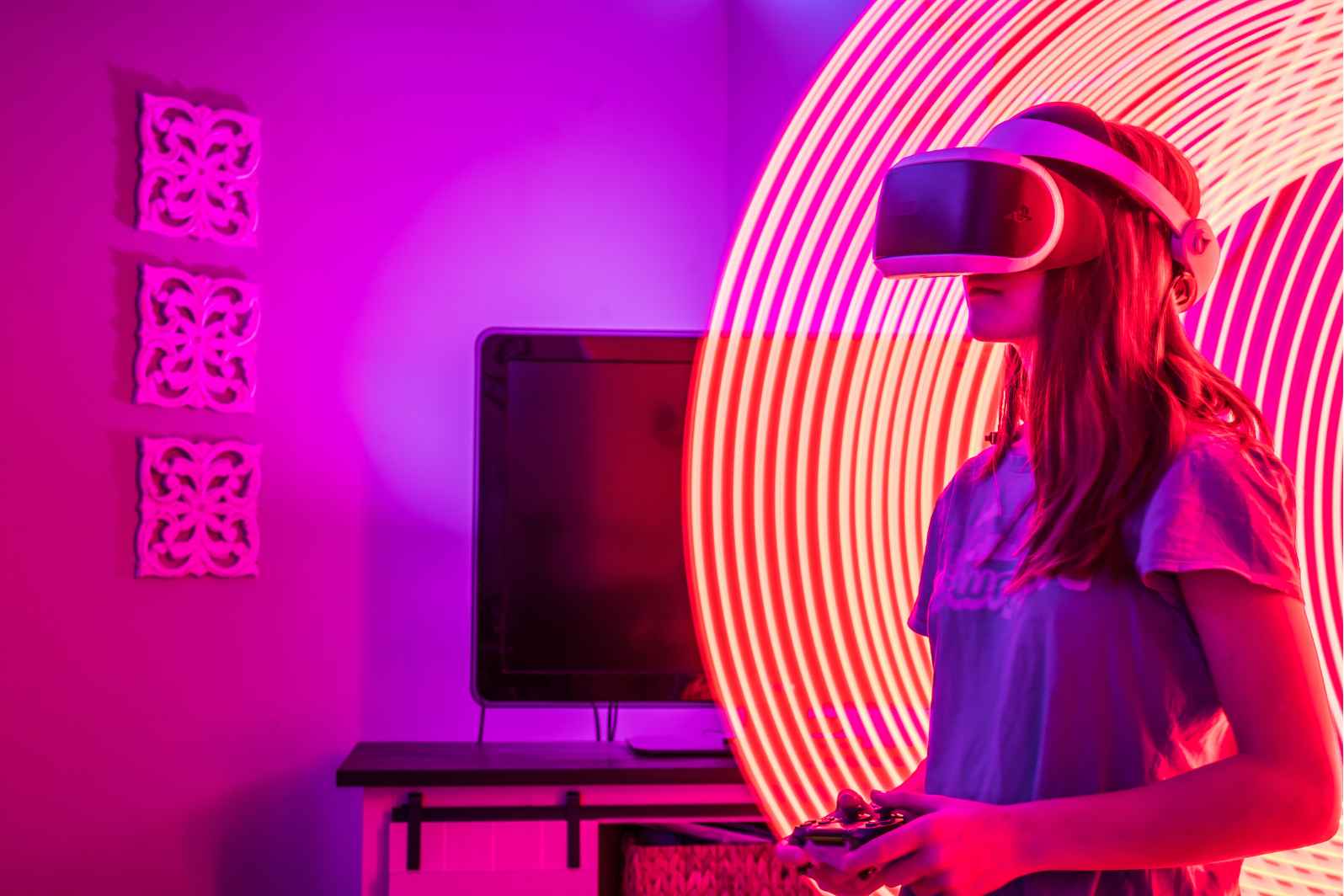
For a long time now, we’ve thought of virtual reality (VR) primarily as just a really good platform for gaming. Today, it’s revitalizing industries like healthcare, education, real estate and tourism to provide interactive modalities they develop similar to the real life. Through virtual environments replicating the real world, VR is enabling individuals to learn, train, design – even heal – in ways that weren’t possible before. The technology is changing the way we work, communicate and experience the world.
1. Healthcare and Medical Training
VR is changing health care by enabling physicians and medical students to practice procedures in safe, virtual environments.
Example: VR is used by surgeons to practice intricate surgeries in advance of trying them out on real people.
The takeaway: VR boosts medical precision, lowers risks and better prepares the medical skool set.
2. Therapy and Mental Health Treatment
The technology is now being used to treat everything from the fear of flying and a hatred for spiders, to PTSD (post-traumatic stress disorder) and depression.
Example: Patients can face fears, such as heights or speaking in public, in controlled virtual environments supervised by therapists.
The takeaway: VR therapy is a safe and effective way to get exposure treatment for mental wellness.
3. Education and Skill Development
In the classroom, VR can blur the lines between theory and reality, making complex or abstract concepts easier to grasp.
Example: Students can manipulate a 3-D version of the human body, or take virtual field trips to historical sites.
The takeaway: VR improves learning by making assumption experientially based on experience.
4. Real Estate and Architecture
Virtual reality allows buyers and architects to see properties before they are built, saving time and money.
Example: Prospective homeowners can be shown apartments virtually and make design changes in real time.
The takeaway: VR reduces complexity in real estate decision making through realistic visualization.
5. Workplace Training and Safety
These days, VR simulators are used in a variety of industries for job training, particularly in hazardous settings such as manufacturing and construction.
Example: Workers can train for how to operate machinery or respond to emergencies without real risk.
The lesson: Training in the virtual space leads to safer work on the job and skills retention.
6. Retail and E-Commerce
The retail industry is embracing VR to allow customers to shop virtually from around the home, and try on for purchase.
Example: Furniture firms let customers try on products in their own home, using VR headsets.
The result: Virtual reality increases customer interaction and is a driver of trust in online purchase decisions.
7. Tourism and Travel
VR is a tool for experiencing destinations from your living room and helping you plan trips.
Example: 360-degree virtual tours of landmarks and hotels on tourism agencies’ Web sites.
The takeaway: VR is a way both to take people around the world, without leaving home.
8. Sports and Fitness
Players and coaches are using VR for training, game planning and performance.
For instance Sports teams utiliza simulators to replicate real-game environment for the analysis of strategies and decision making.
The bottom line: VR boosts athletic performance and provides immersive fitness experiences.
9. Art, Design, and Creativity
Artists and designers employ VR tools to craft 3D paintings, fashion concepts and architectural models.
For example, by comparing with digital artists who can sculpt or paint in virtual space accurately and freely.
The takeaway: VR is opening up new creative pathways across a range of artistic disciplines.
10. Corporate Collaboration and Remote Work
As employers get more comfortable with remote work, virtual reality can provide immersive meeting spaces that feel akin to physical offices.
Example: Companies can use platforms like Meta Horizon Workrooms to have employees work together in a common virtual environment.
The takeaway: VR improves productivity and relationships in remote-hybrid work cultures.
11. Space and Scientific Exploration
VR can allow scientists to conduct simulated space missions and see complex scientific data.
Example: NASA uses VR technology to educate astronauts on life in space by simulating space virtually.
The upshot: VR provides realistic, risk-free simulations that advance scientific progress.
Conclusion
Virtual reality has transformed from a gaming novelty into a life-altering apparatus for practical applications. From Healthcare and education to business and tourism, Virtual Reality is revolutionizing how we learn, communicate and experience life. With the continued growth of VR, its impact is only going to grow as it unites the tap between the digital and real life. The future of VR is not simply entertaining but enables us to improve the lives of people and entire industries in every sector.
FAQs:
Q1. What is virtual reality good for besides gaming?
VR is being put to use in healthcare, education, real estate and other sectors for training, visualization and learning.
Q2. How is VR used in medical training?
It enables physicians to train in a risk-free, true-to-life environment.
Q3. Can VR improve education?
Advantages: Yes, VR does engage learners making it an attention grabber using 3D visual experiences as a part of overall learning experience.
Q4. Is VR useful for remote work?
Absolutely. VR offers immersive virtual meeting rooms for better collaboration and communication.
Q5. What does the future of VR look like?
Efforts around VR will push further into health care, business and design to develop more tailored and realistic experiences.
